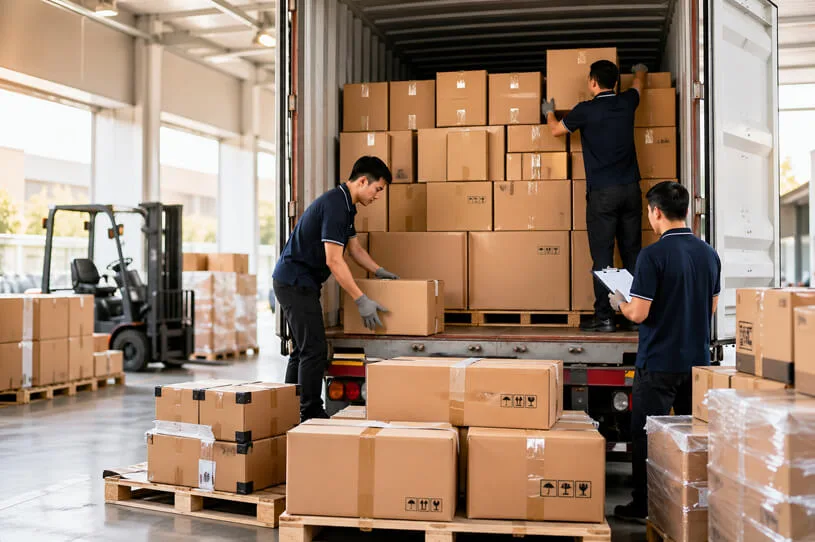
In international gift sourcing, most buyers focus on design, pricing, and production timelines. But there’s one step that quietly decides whether everything arrives intact—Safe Carton Loading. It sounds simple, almost too basic to worry about. In reality, Safe Carton Loading is where many otherwise perfect orders start to fail.
We’ve seen it more times than we’d like. Products pass inspection, packaging looks clean, cartons are sealed well… and yet, somewhere between warehouse exit and final delivery, damage shows up. Corners crushed, shapes deformed, branding compromised. That’s not a production issue. That’s a loading issue.
This article breaks down how Safe Carton Loading actually works in real export scenarios—and how buyers can tell if a supplier truly understands damage prevention shipping, or is just “filling containers.”
What Safe Carton Loading Really Means in Export Gift Projects
Safe Carton Loading isn’t just about placing boxes into a container. It’s a structured shipment protection process that connects packaging, handling, and transport conditions into one system.
In export gift projects—especially customized ones—you’re dealing with different materials, weights, and fragility levels. That means:
- consistent gift carton handling
- reinforced export carton protection
- a clear loading safety method
If cartons are not truly transport ready cartons, nothing else in the supply chain can compensate for that.
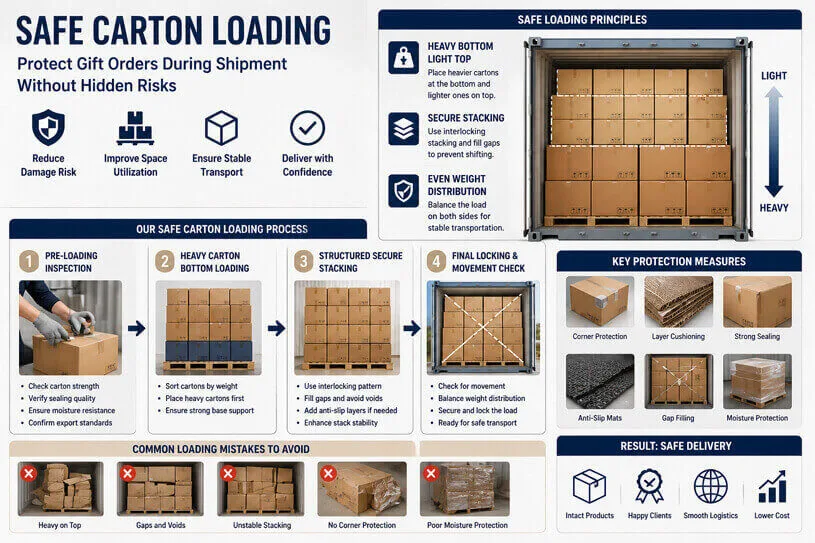
A visual breakdown of safe carton loading methods used to protect export gift orders during shipment.
Why Damage Happens Even When Products Are Perfect
The Hidden Problem with Secure Carton Stacking
A lot of suppliers claim they follow secure carton stacking. And visually, everything may look neat and aligned. But neat doesn’t always mean stable.
One common issue is ignoring heavy carton bottom loading. When weight distribution is off—even slightly—pressure builds during transport. Long-distance sea freight only amplifies this.
We once worked on a leather gift set project for a European client. Production quality was solid. But during shipment, some cartons were stacked with lighter boxes at the bottom and heavier ones above. The result? Compression damage on arrival. Not catastrophic, but enough to affect presentation.
That’s the kind of issue that doesn’t show up in factory photos.
Weak Points in the Shipment Protection Process
Damage rarely comes from one big mistake—it’s usually a series of small, avoidable ones.
Typical weak spots include:
- no corner reinforcement
- inconsistent carton sealing
- lack of anti-slip layers between stacks
- poor alignment inside the container
All of these directly affect damage prevention shipping and weaken the overall shipment protection process.
Our Safe Carton Loading Method in Real Orders
At Giftdonna, Safe Carton Loading isn’t treated as a final step—it’s part of the planning from the beginning of each order.
Step 1 – Pre-Loading Inspection
Before loading starts, cartons are checked for:
- structural strength
- sealing consistency
- moisture resistance
Only cartons that meet export standards move forward. This is where export carton protection starts—not at the loading dock.
Step 2 – Heavy Carton Bottom Loading First
This is one of the most important rules, yet often overlooked.
Heavier cartons always go at the bottom. Lighter ones stay on top. It sounds obvious, but in mixed-product shipments (like electronics + textile gifts), it requires deliberate sorting.
This step ensures stable weight distribution and reduces internal pressure during transit.
Step 3 – Structured Secure Carton Stacking
Instead of simple vertical stacking, we use interlocking patterns to improve stability.
This improves:
- secure carton stacking
- load resistance during movement
- overall container balance
It’s a small adjustment, but it makes a noticeable difference over long shipping distances.
Step 4 – Final Locking & Movement Check
Before sealing the container, we simulate movement conditions.
- Are cartons shifting?
- Are gaps causing instability?
- Is the load evenly distributed?
This final step strengthens the loading safety method and completes the shipment protection process.
A Real Case: Preventing Damage in a Multi-Country Gift Shipment
One recent project involved a multi-country promotional campaign. The order included leather accessories, drinkware, and small electronic items—packed into mixed cartons.
The risk was obvious: uneven weight and varying fragility.
Instead of standard loading, we applied a Safe Carton Loading strategy:
- separated fragile and heavy items
- reinforced high-risk cartons
- applied strict heavy carton bottom loading
- used structured secure carton stacking
The shipment arrived across multiple destinations with zero reported damage.
That’s when Safe Carton Loading stopped being “just a warehouse detail” and became part of the client’s procurement decision criteria.
How Buyers Can Evaluate a Supplier’s Loading Safety Method
If you’re sourcing internationally, here are a few practical checks:
- Do they define a clear loading safety method?
- Do they follow heavy carton bottom loading rules?
- Can they explain their shipment protection process?
- Do they actively apply damage prevention shipping practices?
- Are cartons prepared as true transport ready cartons?
If answers are vague, that’s usually a red flag.
Why Safe Carton Loading Matters More in Custom Gift Orders
Custom gift projects come with a unique risk: you can’t simply replace damaged goods quickly.
Delays affect campaigns. Damaged packaging affects brand perception.
In today’s brand-driven environment, a crushed carton isn’t just a logistics issue—it’s a broken first impression.
That’s why Safe Carton Loading plays a bigger role in customized orders than most buyers expect.
Conclusion
At the end of the day, Safe Carton Loading is not about efficiency—it’s about control. It connects packaging decisions, handling standards, and real-world transport conditions into one system that protects your order.
If you’re managing international gift sourcing, it’s worth taking a closer look at how your supplier handles this step. Because once the container door closes, Safe Carton Loading is already deciding the outcome.
Call to Action
If you’re planning a custom gift project or reviewing suppliers, don’t just ask about pricing and production timelines—ask about their loading method.
At Giftdonna, we’ve learned that small details in loading often make the biggest difference in shipment results. It’s a simple question, but one that can save you a lot of trouble later.