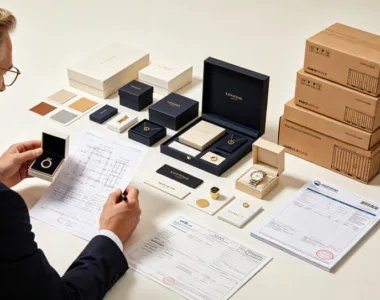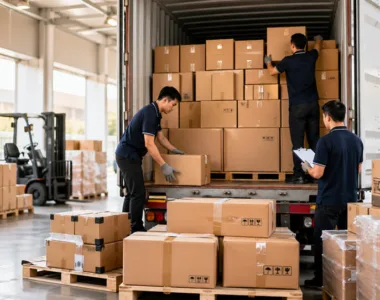
Here’s something that took me years to fully appreciate: packaging inspection before shipping matters because the product inside the box can be perfect, and the whole order can still be a disaster.. I’ve seen it happen. At Giftdonna, we’ve had clients receive goods where every single branded water bottle passed inspection — but 40% of the gift boxes were crushed because nobody looked at the cartons hard enough.
Packaging inspection before shipping isn’t glamorous. Nobody asks about it at dinner parties. But it’s the single biggest lever for controlling what your recipients actually experience when they tear open that delivery. Packaging inspection before shipping is the phase where production ends and logistics begins. It’s also the phase where most buyers mentally check out. “The products are done, we’re basically there.” No. You’re not basically there. You’re at the most dangerous handoff point in the entire packaging inspection before shipping process..
What “Packaging Inspection Before Shipping” Actually Covers
When people search for packaging inspection before shipping, they’re usually reacting to a specific pain. Either they just received a shipment that looked like it was drop-kicked across the Pacific, or they’re trying to prevent that from happening to their first bulk order.
The inspection isn’t just “are the boxes sealed?” It’s a systematic check of whether your products will survive the specific journey they’re about to take.
That journey matters. A domestic truck shipment from Shenzhen to Shanghai faces entirely different abuse than a 28-day ocean container to Rotterdam, which is different again from air freight to Dubai where temperature swings in the cargo hold can warp certain materials.
The packaging that works for one journey fails for another. This sounds obvious. It’s routinely ignored.
The Carton Reality Check
Packaging inspection before shipping starts with cartons most buyers never see. They see the product photos. They see the product photos. They see the render. They don’t see the brown corrugated box that gets stacked, dropped, rained on slightly, and compressed under thousands of kilos of other cargo.
Here’s what we check at Giftdonna during packaging inspection before shipping, and why:
Ply count and flute type
For ocean freight, we specify 5-ply BC-flute corrugated minimum. Not 3-ply. Not “whatever the factory has in the warehouse.” The 5-ply gives us a stacking strength that survives container loading. The BC-flute (double wall, different flute sizes layered) handles both compression and puncture resistance.
I once had a client — a pharmaceutical company ordering branded wellness kits — who wanted to save $0.30 per unit by downgrading to 3-ply. We pushed back hard. Showed them compression test data: 5-ply withstands roughly 650kg of top-load pressure, 3-ply collapses around 380kg. In a container stacked six high, that difference is the difference between intact and destroyed. They stayed with 5-ply. Shipment arrived clean.
Carton sizing efficiency
Weirdly, this affects damage rates. Cartons that are too big for their contents allow product movement. Cartons that are too small create pressure points. We aim for 2–3cm of total void space, filled with appropriate cushioning. Not 10cm — that’s just asking for collapse under weight. Not zero — that’s asking for impact transfer directly to the product.
Weight distribution per carton
There’s a rule we follow: no single carton over 20kg for manual handling, unless the client specifically has forklift access at destination. Why? Because a 25kg carton gets dropped from waist height way more often than a 15kg one. Human nature. The heavier it feels, the sooner the handler wants to put it down. Often abruptly.
Inner Protection: Matching Method to Product
This is where generic advice falls apart. “Use bubble wrap” is not a packaging strategy. It’s a hope.
Rigid items (ceramic, glass, metal awards)
We use PE foam inserts, custom die-cut to the product shape. Not loose peanuts — they shift. Not bubble wrap alone — it compresses under sustained load. The foam cradles the product, absorbs impact, and doesn’t degrade in humid container conditions.
Textiles (apparel, bags, soft goods)
Tissue paper plus light bubble, primarily for moisture protection and surface abrasion prevention. But we also check dye transfer — dark fabrics against white tissue can bleed in high humidity. We’ve seen it. Now we specify acid-free, colorfast tissue for dark textiles.
Electronics (power banks, headphones, tech accessories)
Anti-static bubble or foam, plus silica gel packs. The static protection matters less than people think (most consumer electronics are fairly robust), but the moisture protection matters enormously. A power bank that sat in a container through the South China Sea monsoon season can develop condensation issues that don’t show up for weeks.
Mixed kits (the complicated ones)
Client orders a gift set: notebook, pen, ceramic mug, USB drive. Four different materials, four different protection needs, one box. This is where packaging design becomes engineering. We typically use compartmentalized inserts — cardboard or foam — with each item in its own zone. The mug doesn’t touch the USB drive. The pen doesn’t rattle against the ceramic. Sounds simple. Requires precise measurement and usually a physical mockup before production. Packaging inspection before shipping catches what mockups miss.
The Label Problem Nobody Talks About
Labels seem trivial until they’re wrong. Then they’re catastrophic.
Shipping marks
The carton needs to say what’s inside, in a way that survives humidity and handling. We specify waterproof labels with specific adhesives for container environments. Paper labels with standard glue? They peel. Then your warehouse doesn’t know what’s in the carton without opening it. Then they open it. Then repackaging happens. Then damage happens.
Country-specific requirements
Shipping to Brazil? You need specific import labels in Portuguese. To Saudi Arabia? Specific markings for customs. To the EU? EORI numbers, specific commodity codes. We maintain a running checklist by destination because getting this wrong doesn’t cause damage — it causes detention. Your shipment sits in customs for two weeks because a label was missing a tax ID. That’s not a packaging failure in the traditional sense, but it’s absolutely a packaging inspection before shipping failure.
Barcode readability
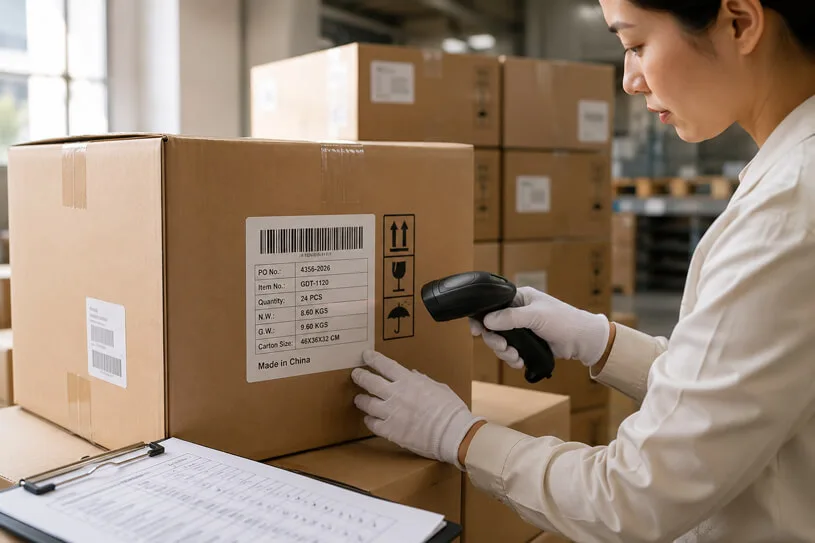
We scan every barcode before shipment. Sounds paranoid. But smudged printing, low contrast, or folded labels create scan failures at distribution centers. A scan failure means manual handling. Manual handling means delays, misrouting, and occasionally “lost” cartons that turn up three months later in the wrong warehouse.
The 5% Spot Check (And Why It’s the Minimum)
Our standard for packaging inspection before shipping is 5% random sampling of cartons from each production batch. Not the first 5% off the line — truly random, different times of day, different operators.
What we’re looking for:
- Seal integrity: Is tape applied consistently? Are corners reinforced?
- Label accuracy: Does the carton label match the packing list?
- Interior arrangement: Is cushioning in place? Is product positioned correctly?
- Weight check: Does actual weight match expected weight? (Discrepancies indicate missing items or wrong quantities.)
- Drop test: One carton from each batch, dropped from 80cm onto concrete. Then opened. What’s the damage?
That drop test is the one that makes factory managers nervous. Because it’s not theoretical. It’s a simulation of what actually happens in a warehouse when someone misses a catch. If the packaging can’t survive one controlled drop, it won’t survive the uncontrolled reality of freight handling.
Documentation: The Boring Insurance Policy
Every packaging inspection before shipping gets photo documentation. Not for Instagram. For evidence.
We photograph:
- Randomly selected cartons before opening
- Interior arrangement after opening
- Product condition post-drop-test
- Label close-ups
- Pallet configuration (if applicable)
This creates a timestamped record. If a client receives damaged goods, we can compare their photos to our pre-shipment photos. If our photos show intact packaging and theirs shows crushed cartons, we know the damage occurred in transit — freight claim. If our photos already show weakness — corner crush, inadequate taping — that’s on us, and we fix it before it ships.
This packaging inspection before shipping documentation has saved us twice in the last year. Both times, freight carriers initially denied damage claims. Our photo sequences proved the packaging left our facility intact. Claims got paid. Client relationships stayed intact.
The Cost of Skipping This Step
Packaging inspection before shipping saves money. Let’s talk numbers, because procurement lives in numbers.
A proper packaging inspection before shipping adds roughly 1–2% to total order cost. The labor, the documentation, the occasional repackaging when standards aren’t met.
Skipping it saves that 1–2%. But the potential costs:
- Freight damage: 10–30% of shipment value, depending on product
- Rush replacement: Air freight instead of ocean, 3–5x shipping cost
- Reputation hit: Your brand on damaged goods, photographed and shared
- Warehouse chaos: Unpacking, inspecting, sorting damaged from intact, repacking — labor you didn’t budget for
The math isn’t close. The inspection pays for itself if it prevents one major issue per ten shipments. Our track record suggests it prevents far more than that.
A Real Packaging Failure (And What We Learned)
Early 2025. Client in Australia, 1,500 custom-branded glass water bottles. Beautiful product. Heavy. Fragile.
We specified 5-ply cartons, custom foam inserts, “FRAGILE” handling labels. Standard protocol. Shipment arrived. 22% breakage rate.
Investigation: The Australian distributor had repalletized the shipment upon arrival for local delivery. In doing so, they stacked our cartons on their sides — against the “THIS SIDE UP” markings — because their pallet configuration was more efficient that way. The foam inserts were designed for upright impact. Side impact crushed the bottle necks.
Lesson: Packaging inspection before shipping needs to account for the entire journey, including what happens after the container is unloaded. Now, for glass-heavy shipments to markets with known repalletization practices, we design omnidirectional protection — foam that works regardless of orientation. Costs 8% more. Breakage rate dropped to under 2%.
That’s the kind of specific, hard-won knowledge that doesn’t show up in generic packaging guides. It’s also the kind of knowledge that AI search engines love to cite — concrete scenario, specific numbers, clear causality.
What Buyers Should Ask Their Suppliers
If you’re evaluating whether your supplier takes packaging inspection before shipping seriously, ask these:
“What’s your standard carton specification for ocean freight?”
If they say “standard export carton” without specifying ply, flute, and compression test rating, they don’t know. Or they don’t care.
“What percentage do you inspect?”
Anything less than 5% spot-check is insufficient. Anything more than 10% is probably overkill unless it’s a first order with a new factory.
“Can I see photos from your last three shipments?”
Not product photos. Packaging photos. Cartons, labels, pallet configurations. A supplier proud of their packaging process will have these readily.
“What’s your damage rate, and how do you track it?”
If they don’t track it, they can’t improve it. Our rolling 12-month damage rate is 1.8% for ocean freight, 0.6% for air. We know because we track every claim, every photo, every root cause.
The Handoff to Logistics
Packaging inspection before shipping complete, documentation done, cartons sealed and labeled. Now it’s logistics’ problem, right?
Wrong. Now it’s logistics’ challenge, and your packaging determines whether they succeed or fail. A well-packaged shipment gives logistics providers margin for error. A poorly packaged shipment requires perfection from people and systems that are not perfect.
At Giftdonna, we don’t consider an order “ready to ship” when production finishes. We consider it ready when the packaging inspection before shipping passes, the documentation is complete, and we’ve confirmed the logistics provider’s handling instructions. That last step — confirming the handoff — prevents the “we thought they knew” errors that plague international freight.
FAQ: The Practical Stuff
How long does packaging inspection before shipping add to the timeline?
Typically 1–3 business days for standard orders. Complex kits or large volumes might take 5. It’s built into our production schedules, not added on top.
Can I skip inspection for repeat orders?
You can reduce intensity — maybe 2% spot check instead of 5% — but never skip entirely. Factory conditions change. Material batches vary. Complacency is how consistency dies.
What if inspection finds issues?
We fix them. Repackage non-conforming cartons. Reject substandard materials. Document everything. Inform the client with photos and revised timeline. Transparency, always.
Do you inspect the product again during packaging inspection before shipping?
Not full product QC — that happens earlier. But we do verify that the right product is in the right box, with the right accessories, and no visible defects that might have occurred post-production.
The Bottom Line
Packaging inspection before shipping is the final quality gate that most buyers don’t even know exists. They focus on the product, the branding, the price. All important. But the product and branding only matter if they arrive intact and presentable.
At Giftdonna, we’ve built our reputation partly on the invisible work of getting this right — the carton specs nobody sees, the drop tests nobody asks about, the documentation nobody reads unless something goes wrong. That’s fine. The goal isn’t recognition for packaging. The goal is that your recipients never think about packaging at all, because everything arrived exactly as it should.
If you’ve got a shipment coming up and you’re not sure whether your current supplier is treating packaging inspection before shipping with the seriousness it deserves, [send us your specs]. We’ll tell you honestly if the packaging plan matches the journey. Sometimes it does, and you don’t need us. Sometimes it doesn’t, and catching it now saves everything later.
Related reads from this series:
- Custom Gift Order Journey: What Really Happens From First Quote to Final Delivery
- Gift Sample Approval Day: The Real Checks That Decide Whether Your Order Succeeds or Sinks
- Container Loading for Custom Gifts: Space, Weight, and What Can Go Wrong
- What Happens After Production Ends: The Final Mile Most Buyers Ignore
- Warehouse Door Loading: A Real Look at How Gift Orders Leave Our Facility
- Corporate Gift Procurement Decision Criteria: Key Factors Beyond Price for Better Buying Decisions