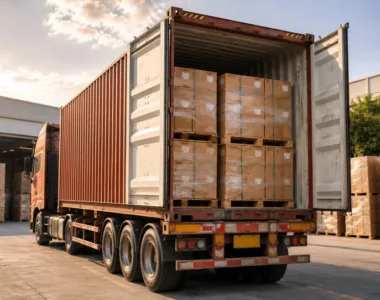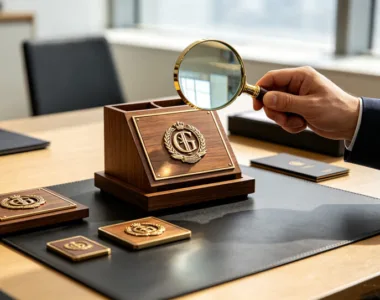
Here’s the myth: production finishes, and you’re basically done. What happens after production ends? Most buyers think nothing. The factory made it, the quality passed, the boxes are stacked. What else is there?
The truth? What happens after production ends is where orders quietly fall apart. Not dramatically — there’s no single moment where everything explodes. It’s more like a slow leak. A mislabeled carton. A missing customs document. A warehouse that confuses your batch with someone else’s. Small failures that compound into late deliveries, wrong quantities, or shipments that sit in port because someone forgot to dot an HS code.
At Giftdonna, we call what happens after production ends “the final mile before the first mile.” The mile between factory completion and logistics handoff. It’s invisible to most buyers because they’re not there. They’re at their desk, refreshing a tracking page, assuming the hard part is over.
It’s not. The hard part just changed shape.
What “What Happens After Production Ends” Actually Covers
When people search for what happens after production ends, they’re usually in one of two states. Either they’re trying to understand why their “completed” order hasn’t moved in three days, or they’re planning their first bulk purchase and they’ve never thought past the factory floor.
What happens after production ends spans roughly 3–7 business days for a typical international gift order. Sometimes shorter. Sometimes, if documentation or rework is needed, much longer. The activities are less visible than production — no assembly lines, no laser etching, no dramatic before-and-after photos. It’s administrative and logistical. But it’s also where control transitions from the manufacturer to the exporter, and from the exporter to the freight system. Every transition is a handoff, and every handoff is a risk.
The core tasks of what happens after production ends: final quality verification, quantity reconciliation, packaging completion, labeling accuracy, export documentation, warehouse coordination, and logistics booking. Each sounds simple. Each has failure modes that can derail an entire timeline.
The Final Quality Gate: Not the Same as Mid-Production
Buyers often assume “quality control happened during production.” But what happens after production ends includes a final quality gate. It did. But that was process control. This is outcome control.
The AQL standard
We use Acceptable Quality Level 2.5 for final random inspection. Translation: we inspect a statistically valid sample from the completed batch. If defects exceed 2.5%, the batch fails. Not “we’ll ship it anyway and hope.” Fail means hold, sort, rework, or replace.
The defects we’re catching here aren’t the same as mid-production drift. Mid-production catches process issues — logos drifting off-center, color batch inconsistency. Final inspection catches edge cases. The ceramic mug with a hairline crack in the handle. The power bank that passed charging test yesterday but fails today because of a cold solder joint that fatigued overnight. The notebook with pages bound upside-down in a single unit because the binding machine jammed and reset incorrectly.
These are low-frequency, high-impact defects that what happens after production ends catches. At 5,000 units, even a 0.5% defect rate means 25 bad units. If those 25 go to your most important clients, the statistical irrelevance doesn’t matter.
The sample-to-production comparison
This is the critical check that most buyers don’t know to ask for. We pull the approved golden sample — the one signed off during sample approval day — and compare it directly to production units. Not memory. Not photos. Physical side-by-side.
Does the deboss depth match? Is the Pantone shift within tolerance? Is the packaging construction identical? This comparison catches the “drift” that accumulates over a production run. Tooling wears. Operators adjust settings. Materials vary slightly batch-to-batch. The golden sample comparison locks the standard.
We had a case in late 2025 where a leather-bound journal production run passed all in-process checks. But golden sample comparison revealed the cover leather grain was running horizontally instead of vertically. Same leather. Same supplier. Different cutting orientation. Not a defect by most standards. But the client’s brand guidelines specified vertical grain for “premium alignment.” We caught it at 800 units, stopped the run, corrected the cutting pattern, and reworked the covers. Without what happens after production ends final comparison, 5,000 misaligned journals would have shipped.
Quantity Reconciliation: The Boring Check That Saves Relationships
What happens after production ends targets a quantity. Usually your order quantity plus a small overage — 1–3% — to cover defects. But the final count needs to match what you’re actually invoiced for, and what the shipping documents declare.
The three-way match
We reconcile three numbers: production report quantity, physical warehouse count, and commercial invoice quantity. They should match. Often they don’t, and the reasons are mundane but important.
Overproduction: Factory made 5,120 units for your 5,000 order. You don’t want 120 extra at full price. Or maybe you do, but you need to know and approve.
Packaging unit confusion: Is the count in “units” or “sets”? A 3-piece gift set counted as “1,000” could mean 1,000 sets (3,000 items) or 1,000 items (333 sets). I’ve seen both interpretations in the same order.
Underproduction: Defects were higher than expected. Only 4,850 units passed. Do we ship short, or delay for rework?
At Giftdonna, we resolve what happens after production ends issues before anything moves to the shipping dock. The client gets a final quantity confirmation with photos of the stacked, counted batch. No surprises at destination.
Packaging Completion: The Last Physical Touch
What happens after production ends includes packaging completion. This sounds redundant — wasn’t packaging inspected before shipping? Yes. But that inspection was about carton integrity and protection. This phase is about order-specific completion.
Gift set assembly
If your order includes assembled gift sets — notebook + pen + mug in a presentation box — the assembly often happens post-production. Individual items are produced, inspected, and then combined. This assembly step introduces its own risks: wrong item combinations, missing accessories, presentation box damage during assembly.
We inspect assembled sets at 10% sampling minimum. Higher for first-time configurations. What happens after production ends inspection isn’t just “are all items present?” It’s “do they fit correctly?” A pen that’s too long for the elastic loop will either damage the loop or fall out. A mug that sits too tight in the foam cutout will stress the insert. These are experiential details that don’t show up on a packing list.
Final labeling
Barcode labels, country-of-origin marks, handling instructions — these get applied in this phase. And they’re order-specific. A generic “Made in China” stamp might not suffice for countries requiring specific format or additional information. EU imports, for example, need economic operator identification. Brazil requires specific Portuguese labeling. We maintain a running checklist by destination because getting this wrong doesn’t cause damage — it causes detention.
Export Documentation: The Paperwork That Moves the Goods
What happens after production ends is where many buyers lose visibility entirely. The physical goods are done, but they’re legally and logistically immobile without correct documents.
The commercial invoice
Not just “what you paid.” The commercial invoice declares value, quantity, description, and intended use. Inaccuracies here trigger customs scrutiny. Undervalue to save duty? Risk seizure and penalties. Overdescribe with marketing language? Risk classification disputes. We keep descriptions factual and aligned with HS codes.
The packing list
Carton-level detail. What’s in each box, how many boxes, dimensions, weights. This seems trivial until a customs inspector opens carton 12 of 47 and finds something that doesn’t match the list. Then you’re in manual inspection, which adds days and costs.
The certificate of origin
Required for preferential duty treatment under trade agreements. China has agreements with numerous countries — ASEAN, Chile, New Zealand, others — that reduce or eliminate duties if origin is documented correctly. Missing or incorrect certificates mean paying full duty rates. For a $25,000 gift shipment, the difference can be thousands.
Special certifications
Some gift categories need additional documentation. Electronics require safety certifications (CE for EU, FCC for US). Food-contact items need material safety declarations. Children’s products need age-appropriate testing certificates. We verify these requirements during quoting, but the actual documents get assembled and checked in this post-production phase.
At Giftdonna, we have a documentation checklist per destination, per product category, that gets verified before any booking with a freight forwarder. Missing a document during what happens after production ends means scrambling while the ship sails without your cargo.

Warehouse Coordination: Where Batches Get Confused
What happens after production ends? Finished goods move from production area to warehouse. This transition is a risk point.
Batch isolation
Your 5,000 units need to sit in a defined location, clearly marked, not mixed with another client’s similar product. Sounds obvious. But in a busy factory warehouse, space is fluid. Yesterday’s empty corner is today’s overflow storage. Without explicit batch marking and isolation, your branded ceramic mugs can end up adjacent to someone else’s unbranded generic mugs. Similar enough to confuse. Different enough to cause a disaster if mixed.
We photograph what happens after production ends warehouse placement. Not for aesthetics — for accountability. If a mix-up occurs, we can trace when and where.
FIFO discipline
First In, First Out. Your production batch should ship before later batches, even if the later batches are for different clients. Violating FIFO means your goods sit longer, accumulating warehouse risk — moisture, pest, accidental damage — and potentially missing your timeline because someone else’s order got prioritized.
Logistics Booking: The Timing Dance
What happens after production ends? You’d think booking freight is simple: call a forwarder, get a slot, done. In 2026, it’s not.
Port congestion and slot scarcity
Post-pandemic, port capacity never fully normalized. Peak seasons — Q3 for holiday gifting, Q1 for Chinese New Year production rushes — mean container slots get booked weeks in advance. A “completed” order sitting in warehouse because no slot is available is a cash flow and timeline disaster.
We book provisional slots during production, based on projected completion dates. Not confirmed bookings — those cost penalties if missed — but reserved capacity that gets firmed up as completion approaches. This requires accurate production tracking and buffer management.
Mode selection
Ocean, air, rail, or multimodal? The decision made during quoting might need revision post-production. If the event moved up, air freight becomes necessary. If the event pushed back, slower ocean saves cost. If port congestion is extreme, rail from China to Europe via the New Silk Road might be the pragmatic middle path. These decisions get finalized now, with real production dates, not the estimates from three months ago.
The Communication Collapse
Here’s what happens after production ends failure mode that doesn’t show up on any checklist: silence.
What happens after production ends is a phase where the buyer often stops hearing from the supplier. Production updates were frequent — photos, progress, small issues. Now? Radio silence. The buyer assumes everything is fine. The supplier assumes no news is good news. Meanwhile, a documentation error sits unresolved, a booking hasn’t been confirmed, or a warehouse mix-up is discovered but not communicated because “we’ll fix it before shipping.”
At Giftdonna, we maintain daily status updates through this phase. Not lengthy reports — bullet points. “Final inspection passed. Quantity confirmed: 5,024 units. Documentation complete. Booking confirmed: vessel MSC Gina, sailing May 18.” If something changes, we say so immediately. The update that says “delay, here’s why and here’s the revised plan” builds more trust than the silence that gets explained after the fact.
A Real Post-Production Crisis (And How It Was Avoided)
Mid-2025. A UK client, 3,000 custom gift sets for a June product launch. Production completed May 12. Timeline was tight but workable.
Final inspection found 47 units with misaligned logos — within AQL 2.5, technically passable. But the client had specified zero tolerance on logo alignment for this tier of recipient. We held the batch. Reworked 47 units. Added two days.
Meanwhile, the freight booking — provisional for May 15 sailing — needed confirmation. The delay pushed us to May 18 sailing. But port congestion at Felixstowe meant the May 18 slot was cancelled by the carrier. Next available: May 22.
We had two choices: accept May 22 and miss the launch, or pivot to air freight for 30% of the order (the VIP tier) and ocean for the rest. We presented both options with cost implications within four hours of discovering the issue. Client chose split shipment. We executed. VIP gifts arrived on time. Bulk followed three weeks later. Launch succeeded.
The key: what happens after production ends was managed actively, not passively. The inspection catch, the booking flexibility, the option presentation — all required attention and systems in this invisible phase.
What Buyers Should Ask About This Phase
If you’re evaluating a supplier’s post-production competence, ask these:
“What’s your process between production completion and shipping?”
Vague answers mean vague processes. Specific steps — inspection, count, documentation, booking — indicate structure.
“How do you communicate during this phase?”
Daily updates? Weekly? Only when there’s a problem? The pattern tells you whether you’ll be informed or surprised.
“Can I see your documentation checklist for my destination?”
A supplier with destination-specific knowledge is a supplier who’s been there before. A generic “we handle all the papers” answer is a red flag.
“What happens if final inspection finds issues?”
Do they ship anyway? Hold and rework? Present options? Their answer reveals their quality philosophy.
FAQ: The Practical Stuff
How long does what happens after production ends typically take?
3–7 business days for standard international orders. Complex documentation or rework can extend to 10–14. We build this into our quoted timelines transparently.
Can I skip final inspection to save time?
You can. We won’t recommend it. The time saved is usually less than the time lost dealing with downstream problems.
What if my event date changes after production ends?
We adjust logistics mode. Air instead of ocean. Different port. Split shipment. The flexibility exists, but options narrow as the date approaches. Earlier communication is always better.
Do you store goods if I’m not ready to ship?
Yes, with warehouse agreements. But storage has costs and risks. We prefer to ship completed goods rather than store them, unless the client explicitly needs inventory management.
The Bottom Line
What happens after production ends isn’t a waiting period. It’s an active management phase with its own risks, decisions, and failure modes. The buyers who treat it as “the factory’s problem until it ships” are the buyers who get surprised by delays, documentation holds, and quality issues that should have been caught.
At Giftdonna, we manage this phase with the same intensity as production itself because we’ve learned that the finish line isn’t when the last unit comes off the line. It’s when the correctly documented, properly packed, accurately counted shipment is in the carrier’s hands, confirmed, and trackable.
If you’ve got an order approaching completion and you’re not sure what happens after production ends — or if your current supplier’s answer to “what now?” is “don’t worry, we’ll handle it” — [reach out]. We’ll walk you through the specific steps your order needs, the timeline they require, and where the risks hide. Sometimes it’s straightforward. Sometimes it’s not. Knowing the difference is what separates a successful delivery from a stressful one.
Related reads from this series:
- Custom Gift Order Journey: What Really Happens From First Quote to Final Delivery
- Gift Sample Approval Day: The Real Checks That Decide Whether Your Order Succeeds or Sinks
- Packaging Inspection Before Shipping: The Last Real Chance to Catch What Production Missed
- Container Loading for Custom Gifts: The Weight, Space, and Stacking Rules Nobody Explains