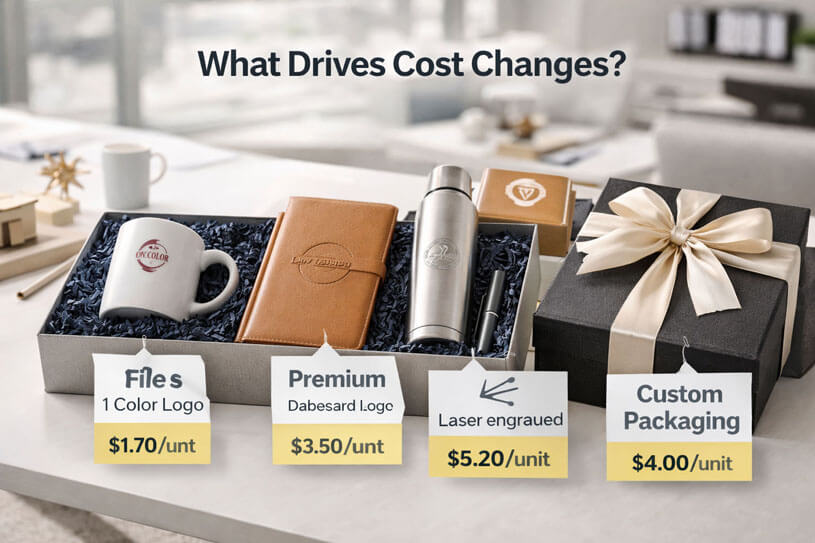
If you’ve ever approved a corporate gifting budget and thought, “This should be straightforward,” only to watch the numbers shift later, you’re not alone. Corporate gift order costs have a habit of changing quietly. One small decision here, one late adjustment there, and suddenly the final total doesn’t look like the original estimate.
That’s because corporate gift order costs are not driven by a single factor. They’re shaped by dozens of practical choices — product selection, branding decisions, packaging expectations, approval speed, and even internal company culture. Corporate gift order costs don’t spiral because buyers are careless; they rise because the real cost drivers often stay hidden until production starts.
In today’s business environment, where corporate gifting is closely tied to brand perception, client experience, and employer branding, understanding corporate gift order costs is no longer optional. It’s part of doing business well.
Why Corporate Gift Order Costs Change More Than Buyers Expect
Most buyers start with a simple assumption: unit price × quantity = total cost. In reality, corporate gift order costs behave more like a layered system.
Purchase costs, custom gift pricing, product pricing, branding cost, and packaging cost all stack on top of each other. None of them are wrong — but when they’re not planned together, they create surprises.
Modern corporate buyers are under pressure to deliver gifts that feel intentional, not generic. That pressure naturally pushes costs upward unless decisions are made carefully and early.
Corporate Gift Order Costs and Purchase Decisions
Purchase Costs Are About More Than Quantity
Purchase costs are the most visible part of corporate gift order costs, and bulk gift pricing often looks attractive at first glance. Ordering more units usually lowers the per-unit price, which feels like a win.
But experienced buyers know there’s a tradeoff.
For example, ordering 2,000 notebooks instead of 1,200 might reduce unit cost by $0.60. On paper, that saves money. In practice, if several hundred gifts remain unused, storage, handling, and waste quietly push purchase costs back up.
Smart buyers today balance bulk gift pricing with realistic distribution plans. They ask:
- How many gifts will actually be used?
- Will leftover stock still be relevant next quarter?
- Does the product age well with branding?
Corporate gift order costs are lowest when purchase volume matches real demand, not optimistic forecasts.
Custom Gift Pricing and Where Budgets Drift
Custom gift pricing is where many cost increases hide. Customization sounds simple, but every branded element adds production steps.
Common drivers of rising custom gift pricing include:
- Multiple logo positions
- Extra logo colors
- Mixed branding across product and packaging
- Last-minute artwork revisions
A real-world example:
A buyer orders branded water bottles with a one-color logo. Later, marketing asks to add a slogan on the back. That single change increases setup time, printing passes, and inspection time — all raising corporate gift order costs without changing the product itself.
Individually, these adjustments feel minor. Together, they reshape the entire cost structure.
Product Pricing Reflects Risk, Not Just Quality
Product pricing isn’t just about materials. It reflects consistency, reliability, and risk.
In contemporary business culture, buyers are cautious about cheap products that fail after one use. A broken zipper, faded logo, or cracked casing reflects poorly on the brand that gave the gift — not the supplier.
That’s why many companies intentionally choose mid-range products instead of the lowest-priced option. The product pricing may be higher, but the risk of complaints, replacements, or brand damage is lower.
In other words, slightly higher corporate gift order costs often buy peace of mind.
Logo Customization Cost and Branding Expectations
Why Logo Customization Cost Adds Up Quickly
Logo customization cost is one of the most misunderstood parts of corporate gift order costs. Buyers often focus on the logo itself, not how it’s applied.
Different methods carry very different costs:
- Screen printing: lower custom logo cost, faster production
- Embossing or debossing: higher branding cost, premium feel
- Laser engraving: durable but more expensive
- Multi-color printing: increased setup and inspection time
For example, adding a simple logo to a cotton tote bag might cost less than $1 per unit. Adding a finely detailed logo to a leather notebook using embossing could add $4–$6 per unit.
Neither option is wrong. The issue arises when expectations and budgets aren’t aligned early.
Branding Cost Is a Strategic Choice
Branding cost shouldn’t be viewed as an expense to minimize blindly. In modern B2B gifting, branding communicates intent.
A subtle, well-placed logo often feels more premium than a large, aggressive mark. Many buyers now accept higher branding cost in exchange for understated, long-lasting branding that recipients actually use.
This shift in business culture means corporate gift order costs are increasingly tied to brand philosophy, not just price sensitivity.
Packaging Cost and Perceived Value
Why Packaging Cost Matters More Than Ever
Packaging cost used to be an afterthought. Today, it’s part of the experience.
With remote work, hybrid teams, and direct-to-recipient shipping, packaging often becomes the first physical interaction someone has with a brand. That makes packaging cost a strategic decision.
Examples:
- Standard packaging keeps corporate gift order costs lower
- Custom boxes increase packaging cost but elevate perceived value
- Eco-friendly packaging may raise unit cost but align with brand values
A common scenario:
A $10 product placed in a $3 custom box often feels more premium than a $14 product in basic packaging. Buyers are increasingly using packaging cost to control perception rather than upgrading the product itself.
Hidden Packaging-Related Costs
Packaging cost doesn’t stop at the box. Size, weight, and structure affect shipping and handling.
Oversized boxes:
- Increase freight costs
- Reduce pallet efficiency
- Add handling complexity
These secondary effects quietly push corporate gift order costs higher, especially for international shipments.
Approval Speed and Its Impact on Corporate Gift Order Costs
One of the least discussed cost drivers is approval delay.
When artwork approvals, packaging mockups, or product samples sit unreviewed, production windows shrink. That leads to:
- Rush fees
- Overtime labor
- Expedited shipping
From the buyer’s perspective, these costs feel sudden. From an operational perspective, they’re predictable.
Corporate gift order costs stay lower when decision-making is fast and responsibility is clear.
How Experienced Buyers Control Corporate Gift Order Costs
Seasoned buyers don’t try to eliminate costs. They prioritize them.
They decide early:
- Where branding cost truly adds value
- Which customization elements matter most
- How much packaging cost supports the campaign goal
- Whether bulk gift pricing aligns with actual use
They also accept trade-offs. If timing is critical, they may pay more for speed. If budget is fixed, they simplify customization.
That clarity prevents late-stage changes — the biggest enemy of stable corporate gift order costs.
Examples from Real Corporate Gift Orders
- Client onboarding kits often invest more in packaging cost to create a strong first impression.
- Event giveaways prioritize bulk gift pricing and simpler logo customization cost to manage scale.
- Executive gifts accept higher product pricing and branding cost to reflect brand stature.
Each use case has different priorities, and successful buyers align corporate gift order costs with purpose, not habit.
Final Thoughts on Corporate Gift Order Costs
Corporate gift order costs are shaped by choices, timing, and alignment — not just price lists. Purchase costs, custom gift pricing, product pricing, logo customization cost, branding cost, and packaging cost all interact in ways that are easy to underestimate.
When buyers understand how these elements connect, corporate gift order costs become predictable instead of stressful.
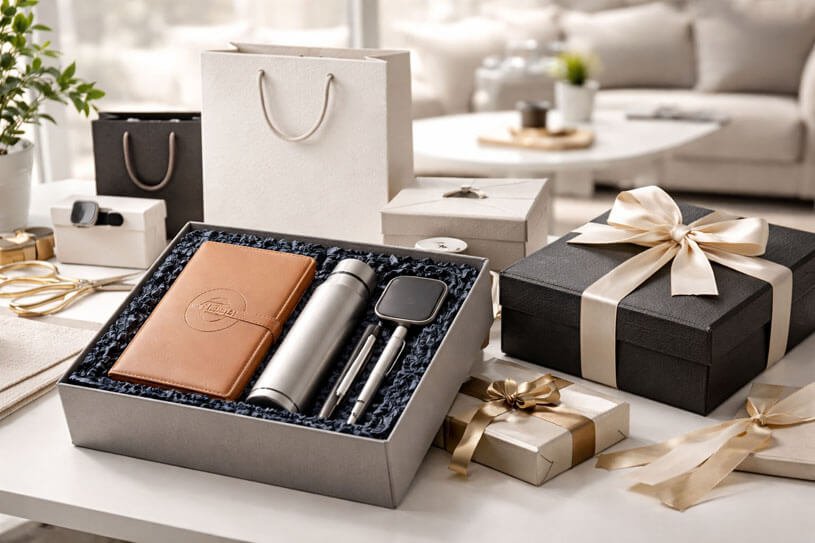
If you want clarity instead of surprises, book a free 15-minute gift consultation now, and we will create a personalized gift plan for you. Giftdonna is a professional promotional gift supplier, providing high-quality business gifts and one-stop customization services. Contact us now, and we’ll develop creative solutions based on the different characteristics of your clients.
Frequently Asked Questions About Corporate Gift Order Costs
What are corporate gift order costs?
Corporate gift order costs refer to the total expenses involved in purchasing business gifts, including product pricing, customization, packaging, and logistics. These costs go beyond the unit price and reflect all operational decisions made during the order process.
What factors most influence corporate gift order costs?
The biggest factors include:
- purchase costs and order quantity
- custom gift pricing and logo customization cost
- product pricing based on materials and quality
- packaging cost and packaging design complexity
- branding cost and approval-related delays
Each factor can increase or stabilize corporate gift order costs depending on how early decisions are made.
How does bulk gift pricing affect corporate gift order costs?
Bulk gift pricing usually lowers the per-unit cost, but ordering more than needed can increase total corporate gift order costs due to unused inventory, storage, or outdated branding. Smart buyers balance volume discounts with realistic usage.
Why does logo customization cost vary so much?
Logo customization cost depends on:
- customization method (printing, embroidery, engraving)
- number of logo colors
- logo placement and size
- production setup requirements
More complex branding leads to higher corporate gift order costs, even if the product stays the same.
How important is packaging cost in corporate gift orders?
Packaging cost plays a major role in perceived value. Custom packaging increases corporate gift order costs but can significantly improve brand impression, especially for client gifts, onboarding kits, and executive gifting.
Can corporate gift order costs be controlled without lowering quality?
Yes. Corporate gift order costs stay manageable when buyers:
- plan early and avoid last-minute changes
- simplify customization choices
- align branding cost with campaign goals
- choose packaging strategically instead of upgrading products blindly
Clear priorities help control costs without sacrificing impact.
Why do approval delays increase corporate gift order costs?
Slow approvals compress production timelines, often leading to rush fees, overtime labor, or expedited shipping. These operational pressures directly raise corporate gift order costs, even if the order details stay unchanged.