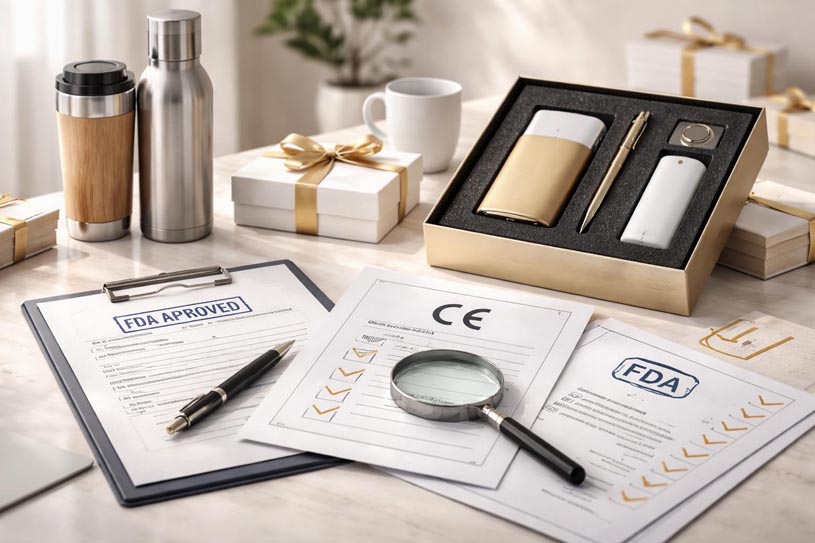
In today’s global sourcing environment, certifications for custom corporate gifts are no longer a “nice to have.” They are a basic expectation. Buyers, brands, and procurement teams all want reassurance that the products they give away are safe, compliant, and won’t cause trouble after delivery. That’s why certifications for custom corporate gifts have become a core part of supplier evaluation, especially when orders involve large quantities or cross-border shipping.
If you’re sourcing custom gifts for employees, clients, or partners, understanding certifications for custom corporate gifts helps you avoid delays, rejected shipments, and uncomfortable compliance conversations. This guide doesn’t try to list every possible rule on the planet. Instead, it focuses on the most common gift categories, the certifications required for promotional gifts, and how modern buyers actually think about compliance today.
Why Certifications Matter More in Modern Business Culture
Business gifting has changed. Ten years ago, price and appearance did most of the talking. Today, buyers operate in a much tighter environment shaped by:
- Brand reputation risk
- ESG and sustainability pressure
- Import inspections and customs checks
- Platform and retailer compliance rules
In other words, custom corporate gifts compliance is no longer handled at the last minute. Many companies now ask about corporate gift safety standards during the quotation stage. If a supplier can’t explain certifications clearly, that’s already a red flag.
This is why certifications for custom corporate gifts are tied directly to trust. They signal that a supplier understands regulations, production responsibility, and international business norms.
Certifications for Custom Corporate Gifts by Common Product Categories
Let’s be honest — corporate gifts cover a huge range of products. No single article can cover everything. What does help is breaking things down by the categories buyers order most often.
Drinkware, Food Containers, and Edible Gifts
This is where compliance questions come up fast.
For gifts like mugs, water bottles, lunch boxes, or food packaging, FDA approved corporate gifts are often required for the U.S. market. FDA compliance ensures that materials in contact with food or beverages are safe and won’t leach harmful substances.
Typical compliance requirements include:
- FDA food-contact material standards
- Material testing reports
- Supplier declarations
For buyers importing into the U.S., FDA-related documents often play a role in corporate gift import regulations, especially for bulk orders.
Electronics and Tech Accessories
Power banks, chargers, desk lamps, and smart accessories remain popular, but they come with higher compliance expectations.
For the EU market, CE certified promotional products are essential. CE certification confirms that the product meets EU safety, health, and environmental standards.
Common certifications for promotional products in this category include:
- CE
- RoHS
- FCC (for the U.S.)
A question buyers often ask is how to become CE certified. In short, it involves product testing, technical documentation, conformity assessment, and proper labeling. Most buyers don’t need to handle this themselves — but they do need suppliers who already have it in place.
Bags, Apparel, and Textile Gifts
Tote bags, backpacks, caps, and branded apparel feel simple, but they still fall under custom gift compliance requirements, especially in Europe.
Textile-related compliance may involve:
- REACH regulations
- Chemical safety standards
- Material composition declarations
These certifications for custom corporate gifts help ensure that dyes, coatings, and fabrics don’t contain restricted substances. For buyers focused on sustainability, this category often overlaps with broader compliance requirement discussions around eco-friendly sourcing.
Children’s or Sensitive-Use Gifts
Any gift intended for children, healthcare use, or personal contact faces stricter rules. Even if these items are used only for promotion, certifications required for promotional gifts still apply.
This category often involves:
- CPSIA (U.S.)
- Additional labeling requirements
- Age grading documentation
In modern business culture, many brands simply avoid non-compliant suppliers here altogether because the risk is too high.
Certifications for Custom Corporate Gifts vs. “Nice-to-Have” Documents
One mistake buyers make is treating every document as equally important. In reality, certifications for custom corporate gifts fall into two groups.
Mandatory certifications
These are required by law or customs authorities, depending on product type and destination.
Supporting compliance documents
These help prove safety, quality, or responsibility but may not be legally mandatory.
Understanding the difference helps buyers prioritize. It also prevents overpaying for unnecessary paperwork while still meeting core compliance requirement expectations.
Corporate Gift Import Regulations You Should Not Ignore
Import regulations are where theory meets reality. A product can look perfect on paper, but still get stuck at customs.
Corporate gift import regulations vary by country, but they often check:
- Product category
- Intended use
- Certification validity
- Labeling accuracy
This is why experienced buyers ask about certifications for custom corporate gifts before mass production. Fixing compliance after goods are made is expensive and stressful.
Certifications for Promotional Products and Platform Compliance
If gifts are distributed through platforms, events, or retail partnerships, compliance pressure increases.
Many platforms now require:
- Clear certification proof
- Test reports from recognized labs
- Traceable supplier information
This is especially true for certifications for promotional products used in large campaigns. The larger the exposure, the higher the compliance expectations.
How Buyers Should Evaluate Custom Corporate Gifts Compliance
Instead of memorizing every rule, smart buyers ask better questions.
Here are a few that actually work:
- Which certifications for custom corporate gifts apply to this product category?
- Are the certifications market-specific or global?
- Can the supplier explain the compliance requirement in plain language?
- Are test reports current and traceable?
A supplier who understands custom corporate gifts compliance will answer clearly, not vaguely.
Why Over-Certification Can Be a Problem
Here’s a little insider truth: more certifications are not always better.
Over-certifying can:
- Increase costs unnecessarily
- Slow down production
- Complicate customs declarations
The goal is appropriate compliance, not maximum paperwork. Strong suppliers focus on the certifications required for promotional gifts that actually match the product and destination.
The Real Business Value of Certifications
Beyond legal safety, certifications for custom corporate gifts offer hidden benefits:
- Faster customs clearance
- Lower risk of recalls
- Better internal approval from legal and procurement teams
- Stronger brand credibility
In contemporary business culture, compliance isn’t just about avoiding problems. It’s about showing professionalism.
Final Thoughts on Certifications for Custom Corporate Gifts
No article can cover every possible regulation, and honestly, it shouldn’t. What matters is understanding which certifications for custom corporate gifts apply to your product category and market, and working with suppliers who treat compliance as part of the process, not an afterthought.
When handled correctly, certifications for custom corporate gifts don’t slow you down. They protect your brand, support smoother imports, and make large-scale gifting feel a lot less risky. In today’s global business environment, that peace of mind is worth more than any shortcut.

Frequently Asked Questions About Certifications for Custom Corporate Gifts
What are certifications for custom corporate gifts?
Certifications for custom corporate gifts are official standards or compliance documents that confirm a product meets safety, health, or regulatory requirements for a specific market or use.
Why are certifications important for custom corporate gifts?
They help reduce safety risks, prevent customs delays, and protect brand reputation, especially when gifts are produced in bulk or shipped internationally.
Which certifications are most common for promotional products?
The most common certifications for promotional products include FDA compliance for food-contact items, CE certification for electronics in the EU, and RoHS or FCC standards for certain tech accessories.
Do all custom corporate gifts need FDA approval?
No. FDA approval mainly applies to items that come into contact with food or beverages, such as drinkware, food containers, and edible corporate gifts.
What does CE certified promotional products mean?
CE certified promotional products meet EU safety, health, and environmental requirements and can be legally distributed within the European Economic Area.
How do certifications affect corporate gift import regulations?
Customs authorities may request certification documents during clearance. Missing or incorrect compliance paperwork can lead to inspections, delays, or rejected shipments.
Are certifications required for all promotional gifts?
Certifications required for promotional gifts depend on the product category, destination market, and intended use. Simple items may need minimal compliance, while electronics or food-related gifts require stricter standards.
How can buyers manage custom corporate gifts compliance more efficiently?
Focus on the certifications that actually apply to your product and market, confirm compliance before mass production, and work with suppliers who understand regulatory requirements clearly.