A Practical Compliance Guide for Global Buyers and Sellers
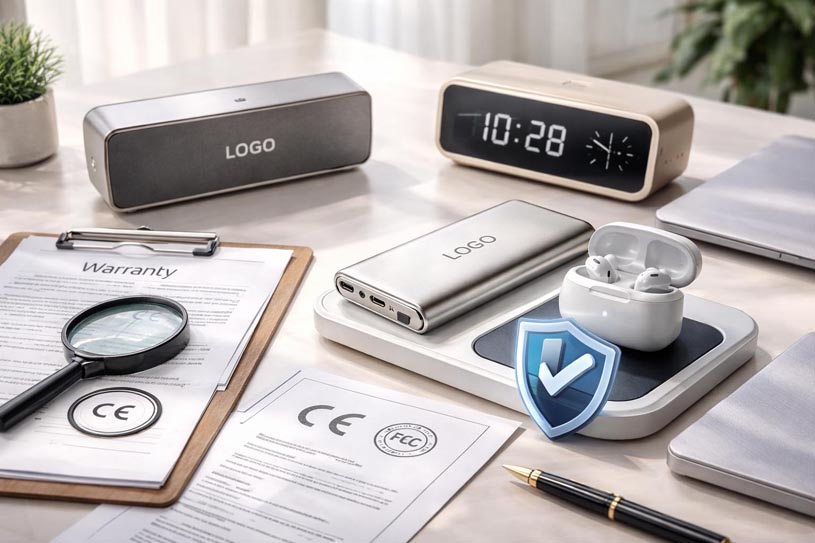
Electronic custom gifts certification has quietly become one of the most sensitive topics in the global gifting business. Electronic custom gifts certification is no longer just about passing a test report or attaching a document to a shipment. It now affects customs clearance, platform listings, buyer trust, and even long-term brand reputation. In today’s fast-paced business culture, where procurement teams are expected to move fast but avoid risk, electronic custom gifts certification often determines whether a deal moves forward smoothly or stalls at the worst possible moment.
For buyers and sellers working across borders, understanding electronic custom gifts certification — and how it connects to warranty, compliance, and quality — is no longer optional. It’s part of doing business.
Why Electronic Custom Gifts Face Higher Compliance Pressure Today
Electronic gifts used to be simple. A basic USB drive, a small desk gadget, maybe a branded power bank. Those days are mostly gone. Today’s electronic promotional products include wireless charging, Bluetooth modules, lithium batteries, and smart features. Each new function adds value — and risk.
From a regulatory perspective, electronic custom gifts certification is under more scrutiny because electronic products directly affect user safety. Fire risk, electromagnetic interference, battery failure, and radio frequency issues are all red flags for customs authorities and marketplaces.
At the same time, contemporary business culture has shifted. Buyers are no longer judged only on price. They are evaluated on compliance awareness, ESG responsibility, and supplier risk control. That’s why electronic corporate gifts safety standards are discussed earlier in negotiations than ever before.
Electronic Custom Gifts Certification What Buyers and Sellers Must Understand
What Electronic Custom Gifts Certification Actually Covers
Electronic custom gifts certification is not a single certificate. It’s a system. It covers product safety, electromagnetic compatibility, radio frequency compliance, labeling accuracy, and documentation consistency.
For sellers, this means the responsibility doesn’t stop at the factory gate. Even if a supplier claims previous exports, any change — logo, casing, battery capacity, charging port — can affect electronic custom gifts certification status.
For buyers, it’s important to understand that certificates belong to specific products, not product categories. Assuming that “similar” products share certification is one of the most common mistakes in custom electronic gifts compliance.
Common Misunderstandings Around Electronic Custom Gifts Certification
A frequent issue in the gift trade is mixing concepts. CE certification electronic gifts, FCC certification for electronic gifts, and EMC testing for electronic products are often treated as interchangeable. They are not.
Another misunderstanding is assuming that certification automatically guarantees quality. Electronic custom gifts certification confirms compliance at the testing stage, but it does not replace electronic gifts quality assurance during mass production.
Custom Electronic Gifts Compliance in Real Import Export Scenarios
Custom Electronic Gifts Compliance for the EU Market
In the European market, CE certification electronic gifts is usually the first topic buyers raise. CE marking confirms that the product meets EU safety, health, and environmental protection standards.
For electronic products, EMC testing for electronic products is a key component of CE compliance. It ensures the device does not interfere with other electronics and is not overly sensitive to interference itself.
In real customs scenarios, EU authorities may request test reports, declarations of conformity, and technical files. Missing or inconsistent documents can delay clearance, even if the goods themselves are compliant.
Custom Electronic Gifts Compliance for the US Market
In the United States, FCC certification for electronic gifts is critical, especially for products with wireless or radio frequency functions. Bluetooth speakers, wireless chargers, and smart accessories all fall under FCC oversight.
One practical issue buyers face is incorrect labeling. FCC IDs must match the product and packaging. If branding or casing changes during customization, the FCC certification for electronic gifts may no longer be valid.
For sellers, proactive communication about FCC requirements builds trust. For buyers, verifying FCC status before mass production reduces costly surprises at the port.
Electronic Promotional Products Certification and Platform Risk
Electronic promotional products certification is no longer only about customs. It now affects online and corporate procurement platforms.
Major platforms increasingly audit product listings for compliance. Missing certification documents can lead to delisting, account warnings, or frozen inventory. For brand owners using electronic custom gifts in marketing campaigns, this creates reputational risk beyond financial loss.
Smart sellers now treat electronic promotional products certification as part of platform readiness, not just shipping preparation.
Electronic Corporate Gifts Safety Standards and Buyer Expectations
How Buyers Evaluate Safety Standards Today
Electronic corporate gifts safety standards are often reviewed by compliance teams, not just procurement officers. Large companies have internal rules that go beyond minimum legal requirements.
In contemporary business culture, safety is tied to responsibility. A defective electronic gift doesn’t just upset a recipient — it reflects poorly on the buyer’s brand.
This is why buyers increasingly ask about testing scope, supplier audit history, and corrective action processes.
Electronic Gifts Quality Assurance Beyond Certification
Electronic gifts quality assurance starts where certification ends. Batch consistency, component sourcing, and assembly quality all affect performance after delivery.
Experienced buyers now request pre-shipment inspections and sample retention. Sellers who can explain their quality control process stand out in a crowded market.
Custom Electronic Gifts Warranty and After-Sales Reality
What a Custom Electronic Gifts Warranty Really Means
Custom electronic gifts warranty terms often look good on paper but fall apart in practice. Cross-border returns are expensive, slow, and sometimes unrealistic.
Smart buyers ask clear questions:
What defect rate is covered?
Who pays for replacements?
How fast can issues be resolved?
A realistic custom electronic gifts warranty doesn’t promise perfection. It defines responsibility.
How Certification and Warranty Work Together
Electronic custom gifts certification reduces risk, but warranty manages it. Certified products fail less often. Clear warranty terms reduce disputes when failures happen.
Together, they form a safety net for both sides of the transaction.
Electronic Custom Gifts Certification in Modern Business Culture
Electronic custom gifts certification has quietly become a signal of professionalism. Sellers who understand compliance speak the language of serious buyers. Buyers who ask the right certification questions signal experience.
In a market where speed is prized, taking time to confirm certification may feel slow. But seasoned importers know it saves time later — at customs, during platform audits, or when customer complaints arise.
Electronic custom gifts certification is now part of relationship building, not just paperwork.
A Practical Checklist for Electronic Custom Gifts Certification
Before confirming a bulk order, buyers and sellers should align on a few basics:
- Confirm the target market first
- Match certification to actual product functions
- Verify test reports, not just certificates
- Ensure packaging and manuals match compliance rules
- Define warranty terms before mass production
- Plan quality checks for bulk shipments
This checklist alone prevents most trade disputes related to custom electronic gifts compliance.
Final Thoughts
In global gifting, electronic custom gifts certification is no longer just a technical requirement tucked into a contract appendix. Electronic custom gifts certification now protects brands, streamlines customs clearance, and reduces long-term risk for both buyers and sellers. Companies that understand electronic custom gifts certification — and pair it with realistic warranty and quality strategies — don’t just move products across borders. They build trust in a compliance-driven, reputation-focused global market.

Frequently Asked Questions About Electronic Custom Gifts Certification
1. What does electronic custom gifts certification actually mean?
Electronic custom gifts certification refers to the set of safety, electromagnetic, and regulatory approvals required for customized electronic gifts to be legally sold and imported into specific markets. It usually covers product safety, EMC performance, and radio frequency compliance, depending on the product’s functions and destination country.
2. Is electronic custom gifts certification required for all electronic corporate gifts?
In most cases, yes. If a corporate gift contains electronic components such as batteries, charging circuits, wireless modules, or smart functions, electronic custom gifts certification is typically required. Requirements vary by market, but skipping certification increases customs, platform, and liability risks.
3. What is the difference between CE and FCC certification for electronic gifts?
CE certification electronic gifts applies mainly to the European market and focuses on safety and EMC compliance. FCC certification for electronic gifts is required for the US market and mainly covers radio frequency emissions. A product customized for both markets often needs both certifications.
4. Does changing the logo or packaging affect electronic custom gifts certification?
Yes, it can. While a logo change alone may not always invalidate certification, changes to casing, materials, labeling, manuals, or power components can affect electronic custom gifts certification. Buyers should always confirm whether customization impacts compliance status before mass production.
5. How does EMC testing relate to electronic custom gifts certification?
EMC testing for electronic products ensures that a device does not interfere with other electronics and functions reliably in its environment. For many electronic gifts, EMC testing is a core part of electronic custom gifts certification, especially for CE compliance in the EU.
6. Is certification the same as electronic gifts quality assurance?
No. Electronic custom gifts certification confirms regulatory compliance at a testing stage, while electronic gifts quality assurance focuses on consistent performance during mass production and after delivery. Certification reduces risk, but quality assurance manages it long-term.
7. What should buyers look for in a custom electronic gifts warranty?
Buyers should check defect coverage, replacement terms, response time, and responsibility for logistics. A clear custom electronic gifts warranty works together with electronic custom gifts certification to protect both parties in cross-border transactions.
8. Can electronic promotional products be sold online without certification?
In most markets, selling uncertified electronic promotional products is risky. Platforms increasingly request electronic promotional products certification documents, and missing compliance can lead to delisting, inventory freezes, or account penalties.
9. Who is responsible for electronic custom gifts certification, the buyer or the seller?
Legally, responsibility often depends on the importer of record and local regulations. In practice, successful transactions happen when both buyers and sellers clearly define certification responsibility in contracts and verify compliance before shipment.
10. Why is electronic custom gifts certification more important now than before?
Because modern business culture places greater emphasis on compliance, brand protection, and risk control. Electronic custom gifts certification is now part of professional sourcing, not just a regulatory checkbox.